CoreGrafX
THE LITTLE GREY CONSOLE OF 1989
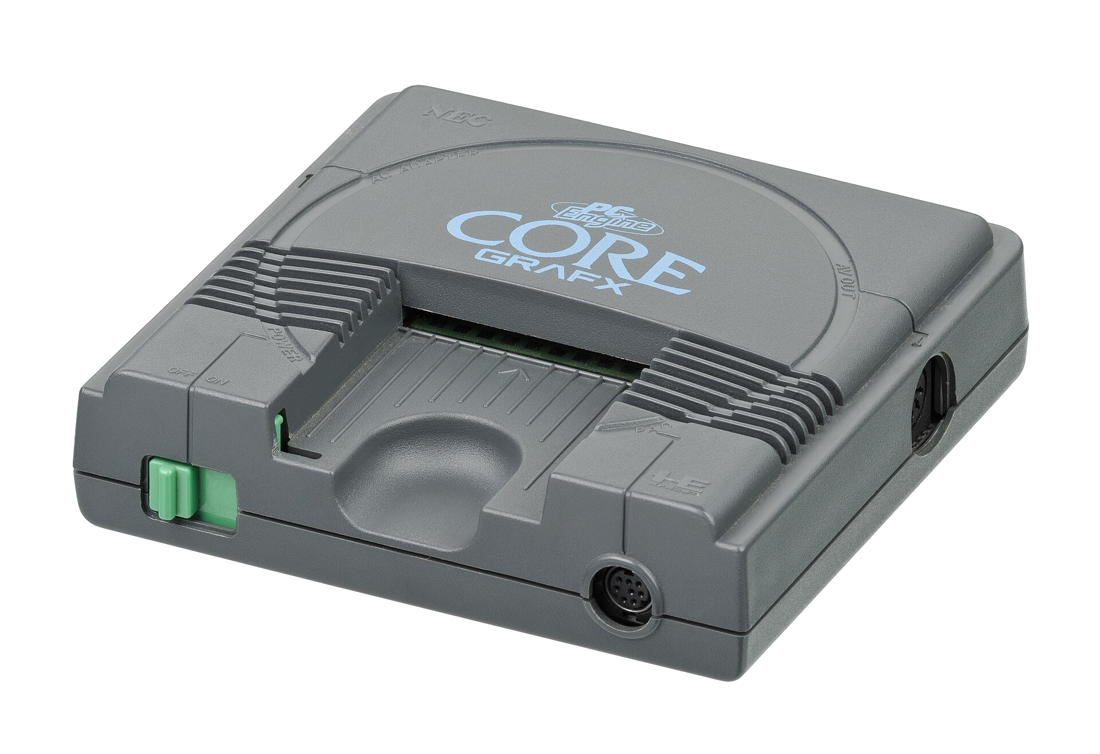
NEC released the PC Engine CoreGrafx in Japan on 8 December 1989. It played games from cards the size of a credit card. This site remembers the machine, its games and its caveman mascot.
CoreGrafX is also a fan token, launched on Dubble. It is here for the fun of remembering.
The button wakes up when the token is launched. Come back on launch day.
Small box, big games
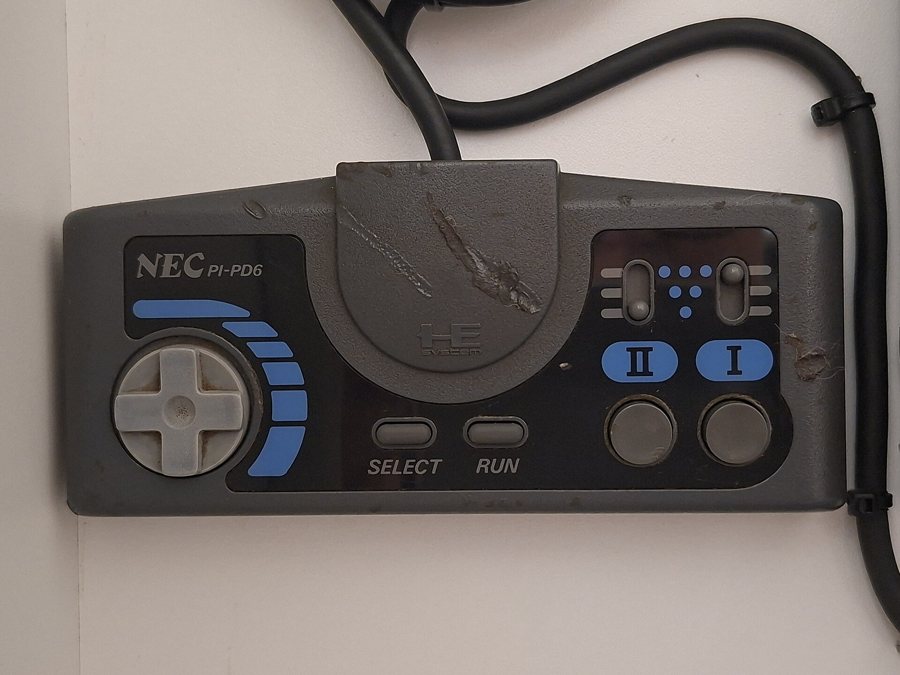
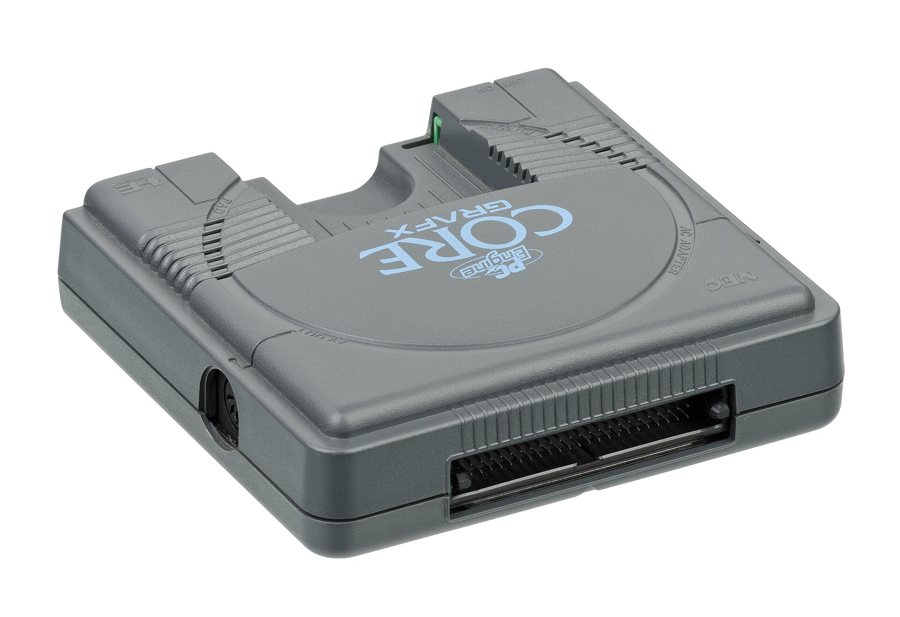
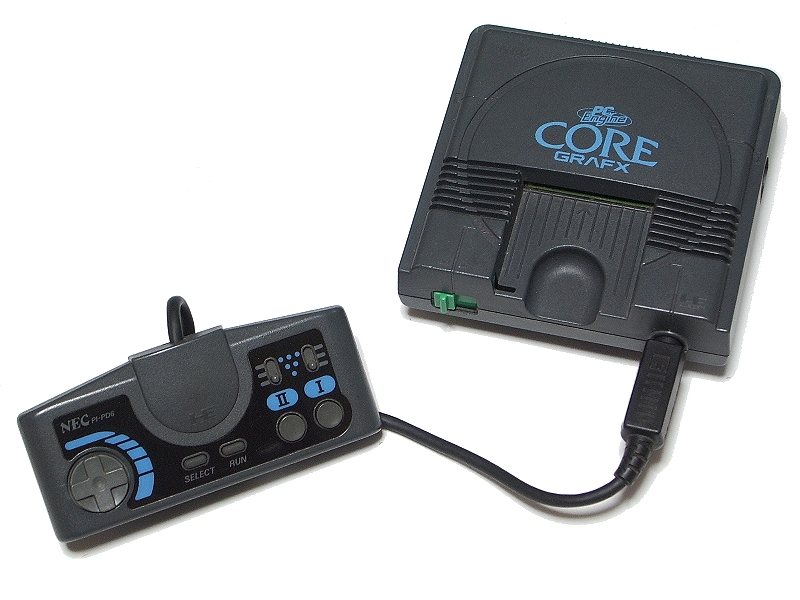
The CoreGrafx is the PC Engine of 1987 in new clothes. The white shell turns dark grey and the letters turn blue. The aerial plug leaves and a proper audio and video socket takes its place.
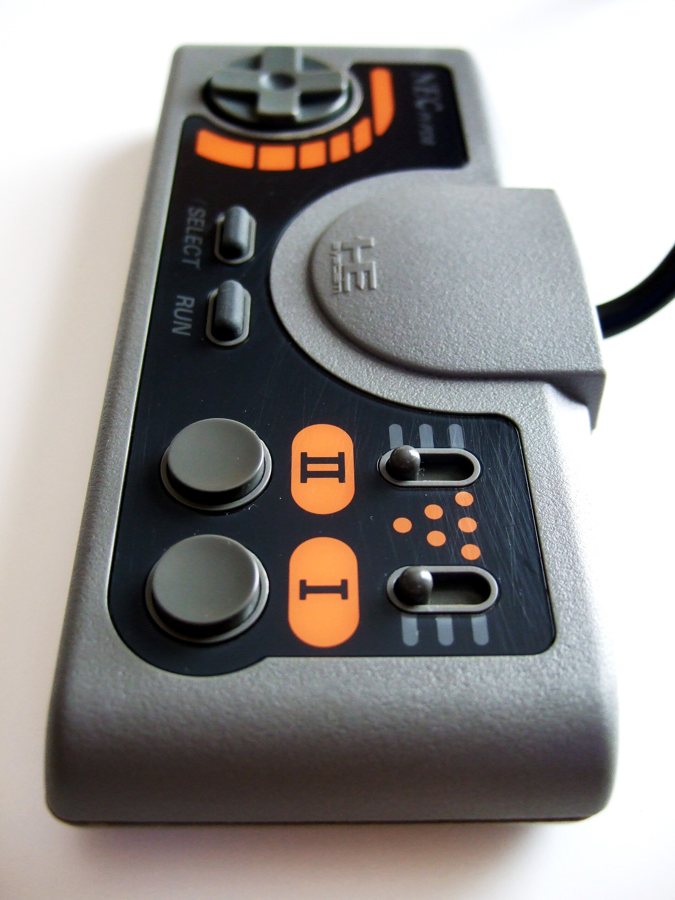
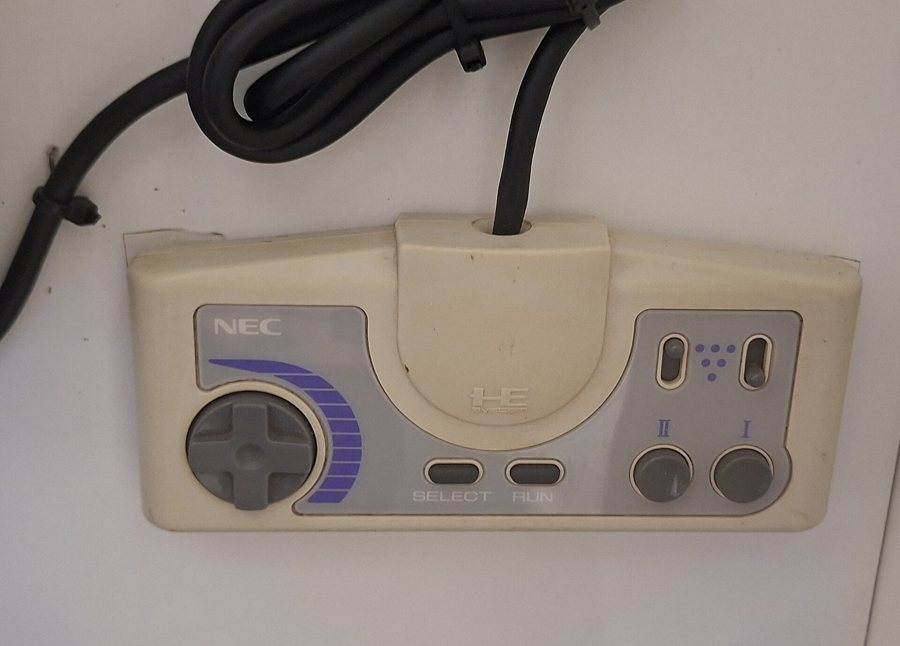
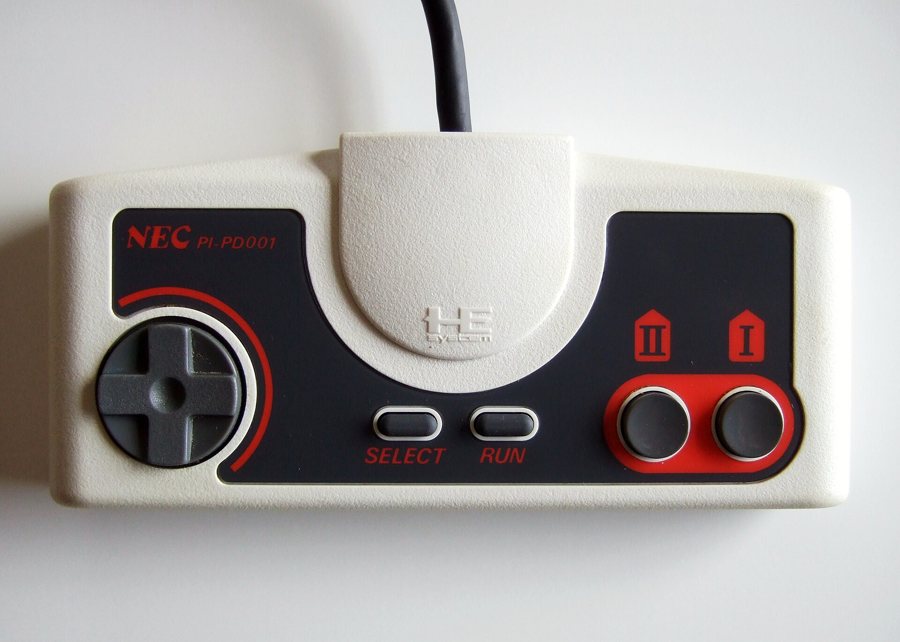
The pad gains two turbo switches, one for each button. Inside sits a revised processor, the HuC6280A. The price stays where it was two years earlier, ¥24,800.
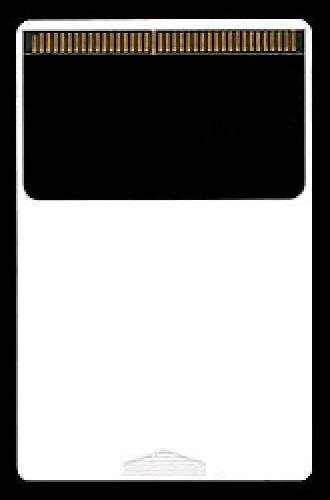
Games come on HuCards. A HuCard is as wide as a credit card and a little thicker. You slide it in the front and switch on.
WHY "PC ENGINE"
NEC and Hudson imagined the console as a core. You were meant to plug things into it, the way you would with a home computer. It was the engine and the add-ons did the rest. The same idea gave the CoreGrafx its name.
WHO MADE IT
Hudson wanted a stronger machine for its games. NEC wanted a console that could read CDs. The two met, Epson made the chip and NEC built the console. Hudson and Mitsubishi Plastics worked out the HuCard together.
Twelve years of HuCards and CDs
The yellow lines are the CoreGrafx's own moments.
 ON THE TABLE
 THE BACK
 THE PAD
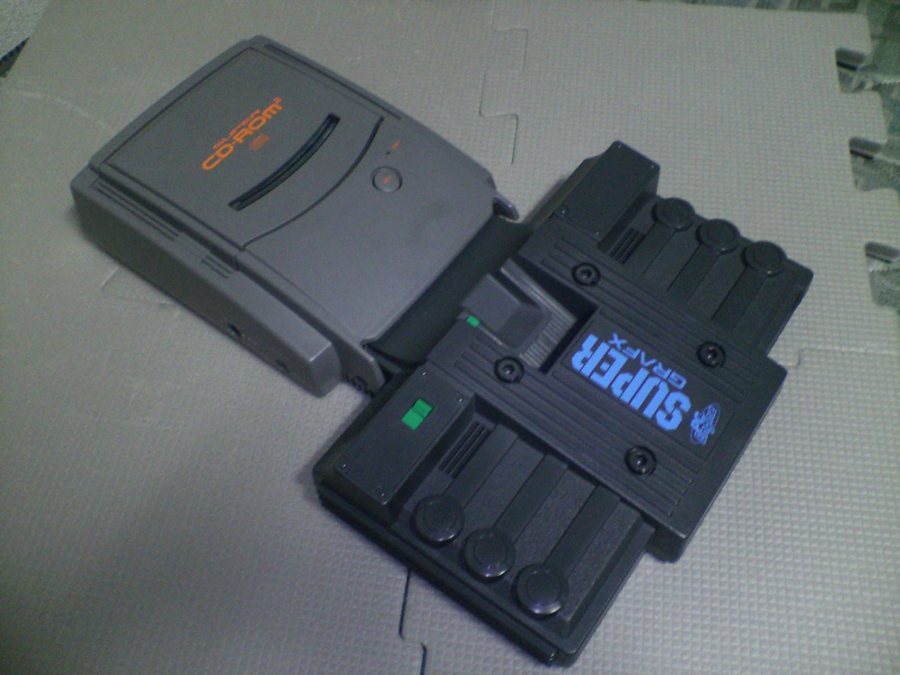
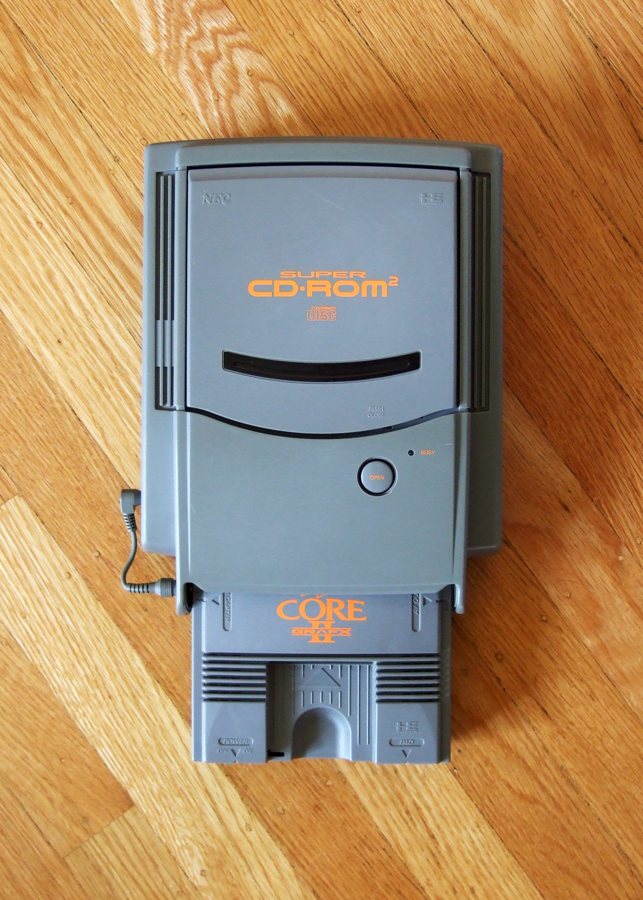 WITH A CD DRIVE
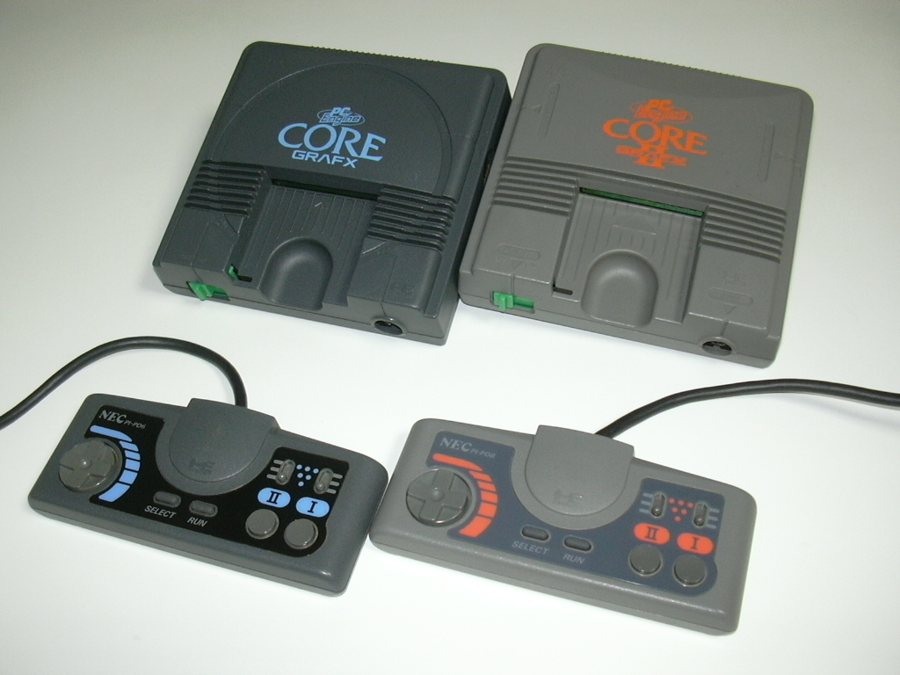 ONE AND TWO
 The PC Engine goes on sale in Japan. Two games are ready that day, Shanghai and Bikkuriman World. NEC ships 600,000 machines in the first year.
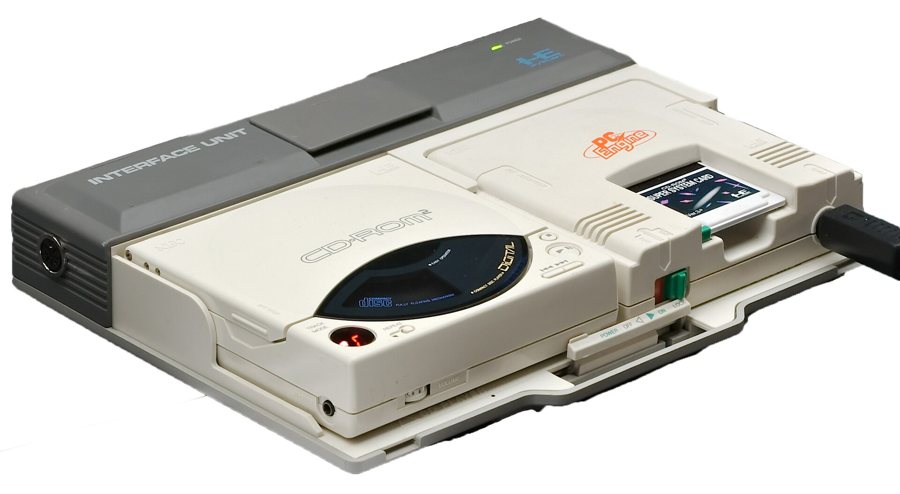
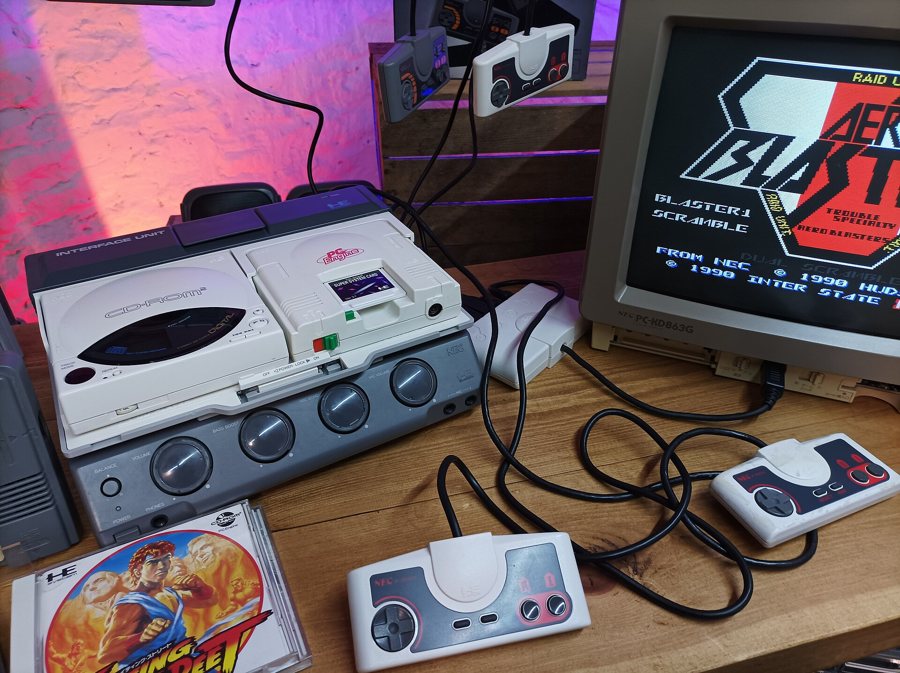 The CD-ROM² arrives. No game console had a CD drive before it.
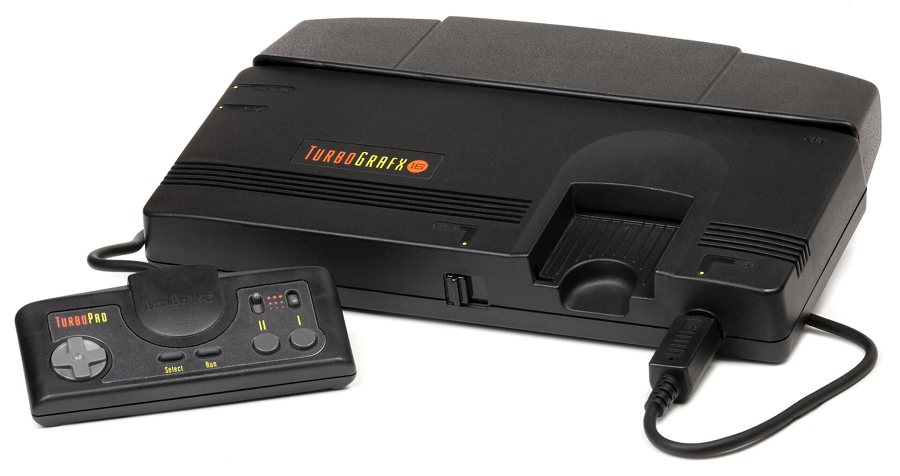 America gets the machine in a big black case, renamed TurboGrafx-16. It costs $199.99 with one game in the box.
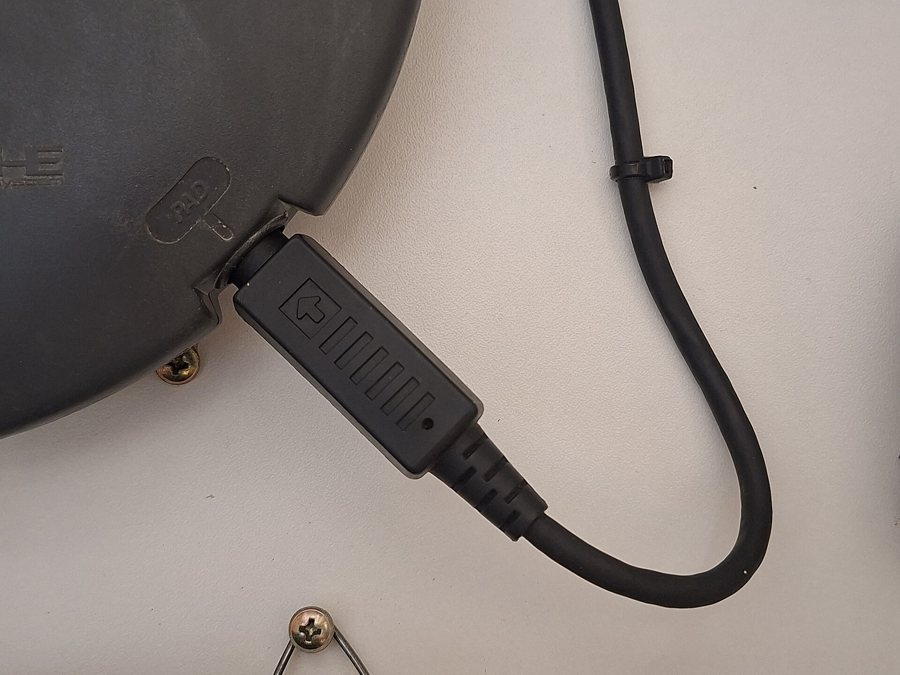 The PC Engine Shuttle lands at ¥18,800. It looks like a small spaceship.
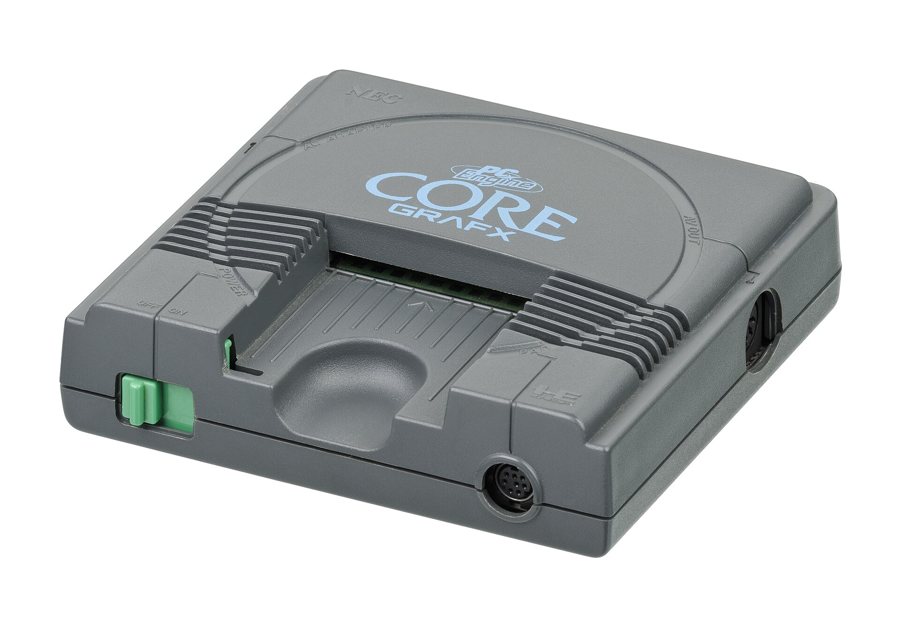 The CoreGrafx comes out at ¥24,800. The SuperGrafx comes out the same day.
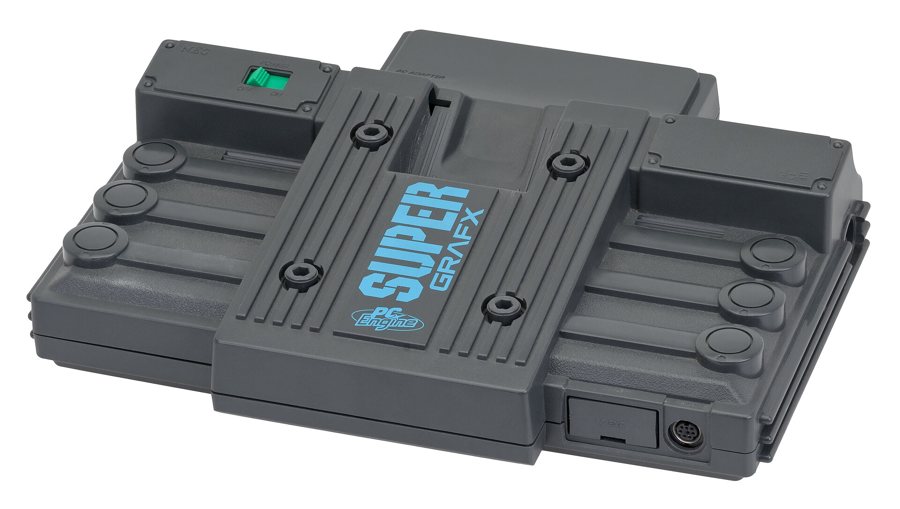 The SuperGrafx carries two video chips and four times the memory. Only a handful of games were made for it.
PC Genjin is released. The console now has a mascot with a very hard head.
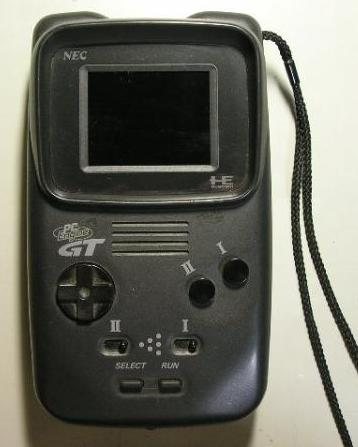 The PC Engine GT plays the same HuCards on a colour screen you can carry.
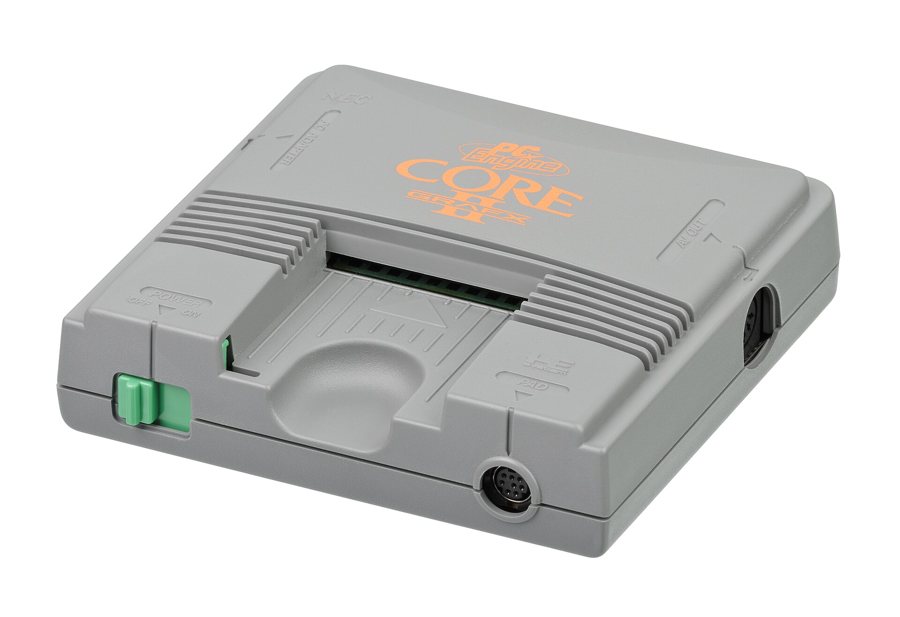 The CoreGrafx II replaces the first one. Orange letters, same machine, ¥5,000 cheaper.
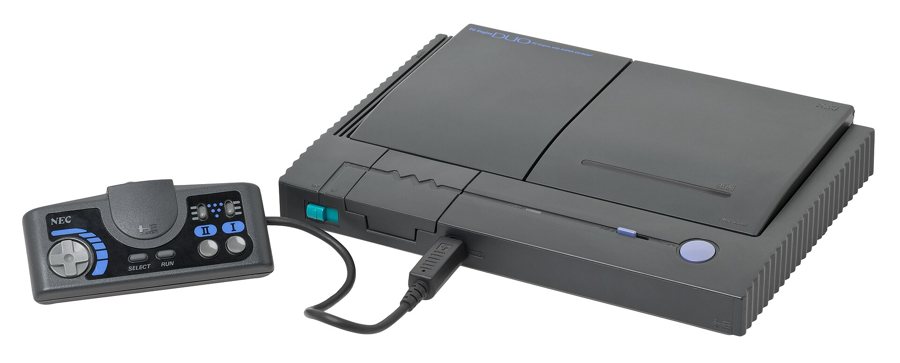 The PC Engine Duo puts the console and the CD drive in one box.
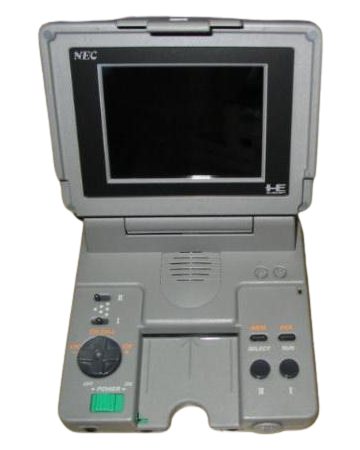 The PC Engine LT opens like a laptop and carries its own screen. Price, ¥99,800.
 The family holds 24.7 % of the Japanese market. Only the Super Famicom sells more.
 The Duo-R arrives, a rounder and cheaper Duo.
 The last HuCard game is released.
 The last official game comes out on CD, twelve years after the first.
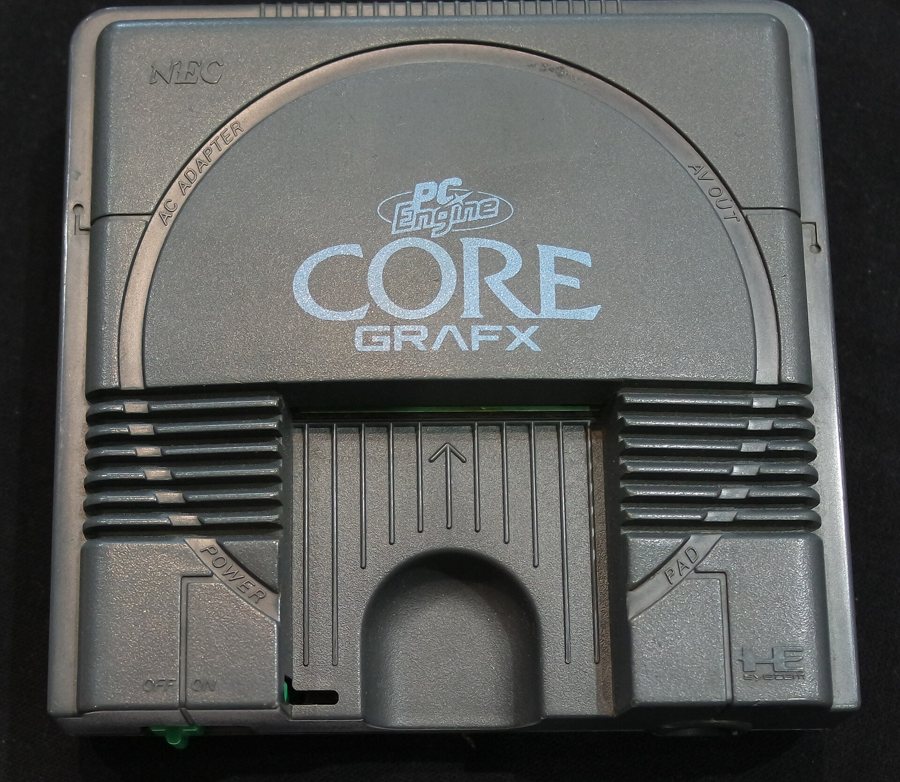 Konami brings it back as a mini console. In Europe it wears the CoreGrafx shell and name.
Echoes of PlayTime on YouTube
Satoshi Matrix on YouTube
Shmup Junkie on YouTube
Pixel Playback on YouTube
PC Kid, the caveman with the hard head
He began as a doodle. The founder of Red Company drew a friend from his university days. The drawing became a four-panel comic in the magazine Gekkan PC Engine.
In Japan he is PC Genjin, which sounds almost like PC Engine. The letters stand for Pithecanthropus Computerus. Europe called him PC Kid and America called him Bonk.
His game came out one week after the CoreGrafx. Red Company designed it, Atlus built most of it and Hudson published it.
HOW HE FIGHTS
He runs, he jumps and he hits everything with his forehead. He can dive head first from the air. He climbs walls with his teeth. Meat makes him stronger, and a big piece makes him unstoppable for a while.
HIS STORY
King Drool, a large green dinosaur, steals the crown of Princess Za. He uses its power to put her people under his spell. PC Kid crosses the land, reaches the moon and sets everyone free.
Pick a card
40 games, each with its own page. 32 came on a card and the round ones came on a disc.
PC Genjin
PC原人1989PC Genjin 2
PC原人21991PC Genjin 3
PC原人31993PC Denjin
PC電人1992R-Type
アール・タイプ1988Gunhed
ガンヘッド1989Super Star Soldier
スーパースターソルジャー1990Final Soldier
ファイナルソルジャー1991Soldier Blade
ソルジャーブレイド1992Magical Chase
マジカルチェイス1991Devil Crash
デビルクラッシュ1990Alien Crush
エイリアンクラッシュ1988Bomberman
ボンバーマン1990Bomberman '93
ボンバーマン'931992Bomberman '94
ボンバーマン'941993Bikkuriman World
ビックリマンワールド1987Shanghai
上海1987Kato-chan & Ken-chan
カトちゃんケンちゃん1987The Kung Fu
THE 功夫1987Galaga '88
ギャラガ'881988Makyō Densetsu
魔境伝説1988Neutopia
ニュートピア1989Dungeon Explorer
ダンジョンエクスプローラー1989Saigo no Nindō
最後の忍道1990Splatterhouse
スプラッターハウス1990Super Momotaro Dentetsu
スーパー桃太郎電鉄1989Gradius
グラディウス1991Salamander
沙羅曼蛇1991Parodius Da!
パロディウスだ!1992Street Fighter II′
ストリートファイターII′1993Aldynes
オルディネス19911941: Counter Attack
1941 カウンターアタック1991Fighting Street
ストリートファイター1988Ys I & II
イースI・II1989Tengai Makyō II: Manji Maru
天外魔境II 卍MARU1992Gate of Thunder
ゲート オブ サンダー1992Winds of Thunder
ウィンズ オブ サンダー1993Snatcher
スナッチャー1992Akumajō Dracula X: Chi no Rondo
悪魔城ドラキュラX 血の輪廻1993Sapphire
銀河婦警伝説サファイア1995Famous series with a chapter on this machine
Street Fighter, Castlevania, Metal Gear Solid, Final Fantasy Tactics. Each has a PC Engine chapter. See what it was then and what it is now.
One engine, many bodies
NEC kept dressing the same machine in new shells. Here they are, with the things you plugged into them.
You can still own one
Thirty-five years later, the console and its cards still change hands. These links leave this site. We earn nothing from them.
Japanese HuCards and American cards do not fit each other's machines. A Japanese CoreGrafx plays Japanese HuCards.
The arcade
Three tiny games of our own. A runner, a shooter and a memory game.